Why Bell Joint Leak Clamps Are a Smart Solution for Water and Wastewater Systems
At JCM, we understand how disruptive bell joint leaks can be for water distribution and wastewater collection systems. While these joints are designed to perform under pressure, age, vibration, shifting soil, and repair disturbances can all take a toll over time. That is why bell joint leak clamps remain one of the simplest and most cost-effective ways to restore a seal without moving the pipe or creating unnecessary stress on the line.
Bell joint leaks can develop across many pipe materials and system types, often as infrastructure ages and original gaskets begin to wear down. In our experience, leaks are more likely in the following scenarios:
- Areas exposed to repeated vibration
- Unstable or freeze-thaw-prone soil conditions
- Changing flow direction
- Nearby excavation and repair work
Even threaded joints can sometimes benefit from a bell joint leak clamp when the fitting can compress the gasket into the leaking gap and create a dependable seal.
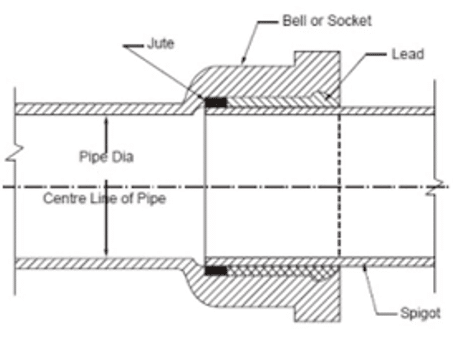
Bell joint leak clamps use a split-body design that wraps around already-joined sections of pipe. Once installed, the clamp gently increases pressure on a wedge-shaped gasket that seals against the bell face and the pipe surface. The result is a new or secondary seal that addresses the leak without shifting the pipe itself. For crews in the field, this means a relatively quick, secure repair when the bell face is square, the pipe surface is smooth enough for sealing, and there is adequate room for installation.
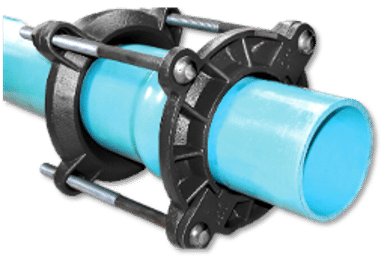
A major advantage of bell joint leak clamps is their versatility. Depending on the application, they can be used on PVC, cast iron, ductile iron, C-900 PVC, HDPE, asbestos-cement pipe, threaded steel couplings, and large-diameter pipe systems. Off-the-shelf and fabricated designs help accommodate standard, undersized, and oversized pipe, making it easier to match the repair solution to actual field conditions instead of forcing a one-size-fits-all approach.
Selecting the right bell joint leak clamp starts with understanding the exact application. Utilities and contractors should consider pipe type, nominal size, actual outside diameter, bell length and diameter, line pressure, line contents, coating requirements, bolt requirements, and gasket material. Accessibility also matters. In tight installation spaces, the available room around the joint can be just as important as the pipe dimensions themselves. Taking time to specify the right fit helps avoid installation delays and ensures consistent gasket compression where it is needed most.
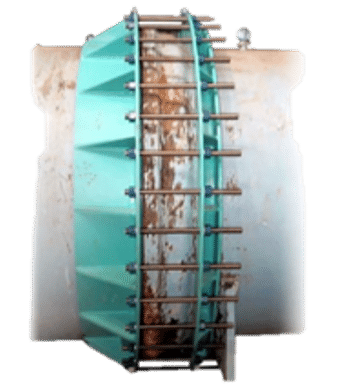
Bell joint leak clamps are not only for active leaks. In challenging soil conditions, high-vibration environments, or locations where pipe joints have been uncovered during nearby work, they can also serve as preventative reinforcement. Adding a clamp or restrainer before a problem escalates can help utilities protect vulnerable joints and reduce the risk of future leaks in high-stress areas.