
Why Proper Bolt Torque Matters More Than You Think

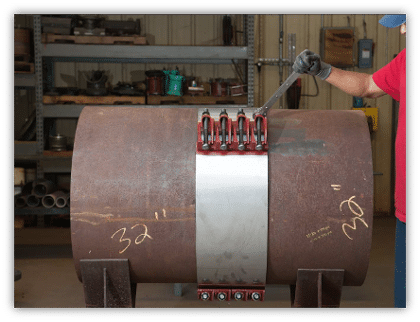
Whether you’re installing a repair clamp, tapping sleeve, service saddle, or coupling, one factor directly impacts the long-term performance of the installation: bolt torque. It’s easy to think of torque as simply “tightening bolts,” but proper torque is what transforms a collection of components into a secure, leak-resistant connection. At JCM Industries, our recommended torque values are the result of engineering calculations, laboratory testing, and decades of field experience. This gives installers the confidence that every fitting performs as designed.

One of the biggest misconceptions in the field is that extra tightening provides extra security. Over-tightening can permanently stretch, or elongate, the bolt, reducing its ability to maintain the proper clamping force over time. Under-tightening presents its own risks as well. Insufficient bolt tension can allow movement between fitting components caused by vibration, thermal cycling, or pipeline harmonics. As the clamping force decreases, gasket compression is reduced, increasing the likelihood of leaks. Finding the correct balance is exactly why JCM provides recommended torque values for every product.
- Size of the fitting
- Gasket surface area contacting the pipe
- Number and size of bolts
- Working pressure requirements
- Bolt material and thread design
For example, large tapping sleeves and full-circumferential repair clamps require additional bolts because they compress a much larger gasket area. Smaller service saddles or outlet-sealing products use fewer bolts because less gasket compression is required.
Even when installers follow the recommended torque values, field conditions can influence the results. Several factors affect how torque is translated into bolt tension, including:
- Thread cleanliness
- Lubrication
- Weather conditions
- Washer material and condition
- Manual versus pneumatic tightening tools
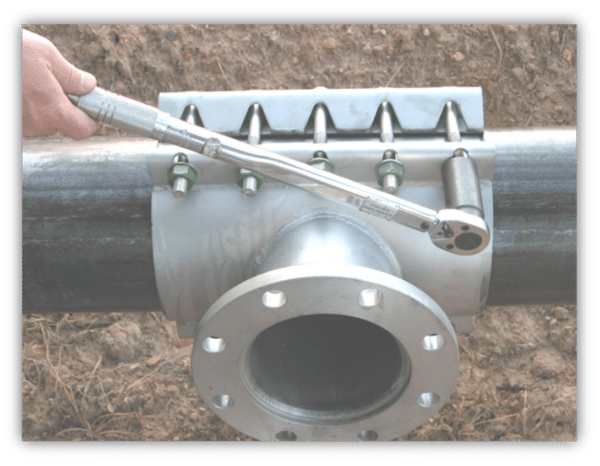
Proper torque is only half the equation. The order in which bolts are tightened is equally important because it allows the gasket to compress evenly around the pipe. Uneven tightening can create localized high-pressure areas while leaving other portions of the gasket under-compressed. JCM provides tightening sequences specific to each product to ensure uniform gasket loading and optimum sealing performance.
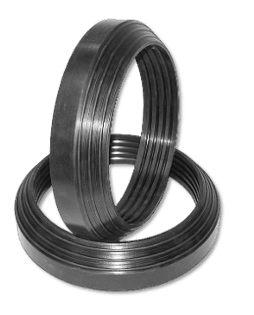
JCM’s published torque recommendations aren’t estimates or rules of thumb. They’re developed through engineering analysis and validated through laboratory and field testing to determine the optimum clamping force for each product. Following these recommendations helps installers:
- Achieve proper gasket compression
- Prevent leaks
- Protect bolts from overloading
- Improve long-term fitting performance
- Maximize installation reliability
When it comes to bolted fittings, success isn’t determined by how tight the bolts feel. It’s determined by applying the right amount of torque in the right sequence. At JCM Industries, every recommended torque value is backed by engineering, testing, and decades of experience helping installers build dependable pipeline connections. Learn more about the importance of torque by contacting us.