

Universal Clamp Couplings vs. Fabricated Repair Sleeves

For both manufacturers and end users, a “permanent repair” comes down to two key objectives: creating a reliable, trouble-free solution and returning the pipeline to full working capacity. Achieving this depends on several factors, including pipe size and material, operating pressure, extent of damage, location, and time constraints.
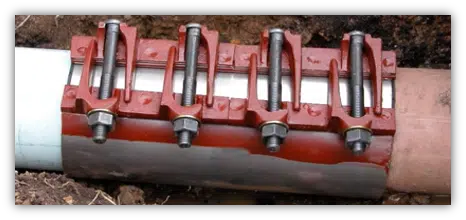
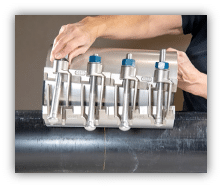
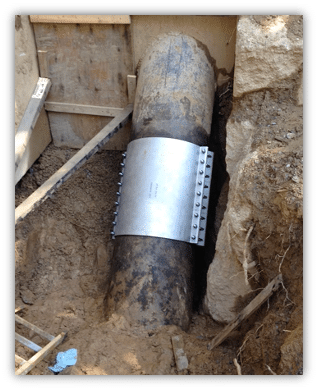
Fabricated sleeves are designed to handle greater forces and provide a higher safety factor, making them ideal for large-diameter pipelines or more severe damage. They are available in a variety of materials, coatings, and configurations, allowing for customization based on environmental and operational needs.
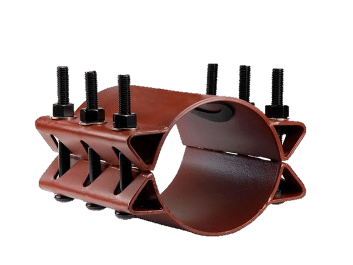
- Holes, punctures, and gouges
- Corroded sections of pipe
- Terminated cracks or splits
- Localized damage that does not involve a full beam break
Beyond sealing the leak, the sleeve reinforces the pipe structure, providing added integrity to the system. It often requires less excavation than other repair methods and can be easier to install in the field. In many cases, it also proves to be a more economical solution when considering long-term performance and reduced maintenance.
Both universal clamp couplings and fabricated repair sleeves have their place in pipeline repair strategies. Clamp couplings remain a reliable, readily available option for many standard repairs, particularly where speed and simplicity are critical. However, for larger pipes, higher pressures, or more significant damage, fabricated repair sleeves provide the strength, safety factor, and longevity needed for a truly permanent solution.
Choosing the correct repair fitting isn’t just about fixing the immediate problem; it’s about ensuring the system continues to operate safely and efficiently for years to come. By understanding the strengths and limitations of each option, utilities and contractors can make informed decisions that protect infrastructure, minimize downtime, and deliver lasting results.