The Fundamentals of Gasket Selection
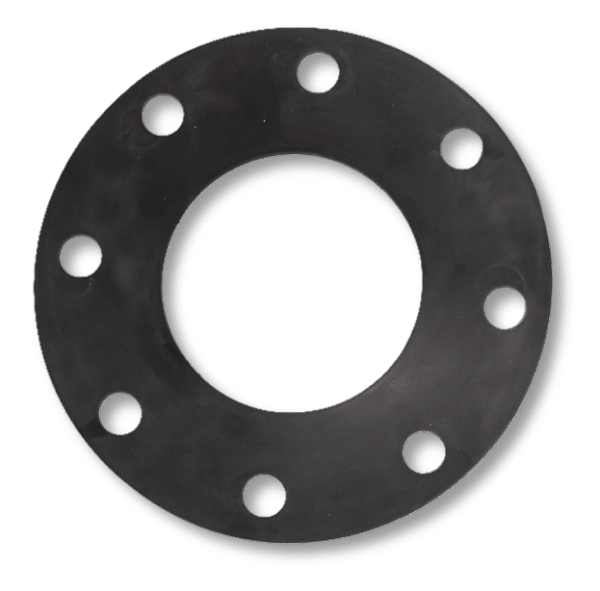
When people think about pipeline performance, they often focus on the fitting, coupling, or repair clamp. Yet one of the most important components in any pipeline system is often the smallest—the gasket.
A gasket’s job is simple but critical: create a dependable seal that keeps line contents where they belong. Whether it’s a water distribution system, wastewater collection line, irrigation network, or industrial pipeline, gasket performance plays a major role in the long-term reliability of the entire installation. While gaskets may not receive much attention when everything is working properly, they quickly become the center of attention when they fail.
Selecting the proper gasket isn’t as simple as choosing a piece of rubber. Different applications require different materials, each designed to perform under specific operating conditions. Some of the most common gasket materials used throughout the waterworks industry include:
- SBR (Styrene Butadiene Rubber): A dependable choice for water, wastewater, mild chemicals, and ambient air applications.

- NBR (Nitrile/Buna-N): Offers excellent resistance to petroleum-based oils, fuels, and hydraulic fluids.

- EPDM (Ethylene Propylene Diene Monomer): Performs exceptionally well in hot and cold-water applications while providing excellent resistance to weathering, steam, many chemicals, and ozone.



Before selecting a gasket, it’s important to understand exactly what conditions it will face throughout its service life. Questions that should always be considered include:

Even if an incompatible gasket appears to work initially, exposure to the wrong chemicals or operating conditions can cause premature deterioration and eventual failure. That’s why consulting the fitting manufacturer is always recommended when applications extend beyond typical water or wastewater service.
Another important consideration is gasket durometer, or hardness. A gasket that is too soft may not withstand higher pressures, while one that is too hard may not properly conform to sealing surfaces. Manufacturers determine the ideal durometer through product design, laboratory testing, and years of field experience to ensure the gasket performs as intended for a specific fitting and application.
Even the highest-quality gasket can lose performance if it isn’t stored correctly.
Three environmental factors have the greatest impact on gasket longevity:
- Heat can alter elasticity and reduce sealing capability.
- Ozone can cause cracking and embrittlement in susceptible rubber compounds.
- Sunlight and UV exposure accelerate aging by breaking down the material, leading to hardening, cracking, and loss of flexibility.

To maximize service life, gasketed fittings should remain in their original packaging and be stored in a cool, dark location away from direct sunlight and environmental exposure. Before installation, gaskets should remain flexible, free of cracks, and show no signs of permanent deformation.
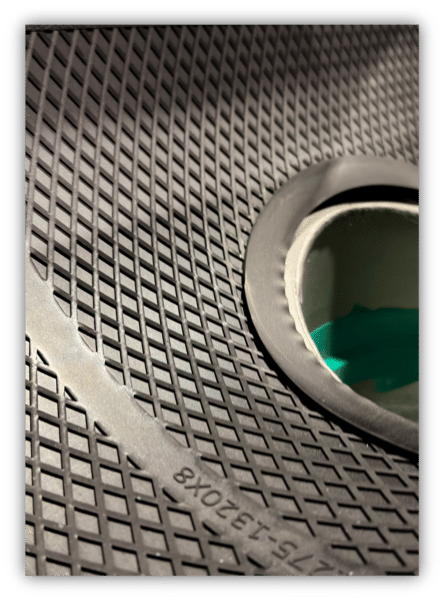
At JCM Industries, we understand that every component plays a role in protecting pipeline infrastructure. Taking notice of the details—especially gasket selection and care—helps ensure every repair and installation delivers the long-term performance customers expect. Learn more about gaskets by contacting us or taking the ‘Basics of Gaskets – Materials, Storage, and Applications’ and ‘JCM Gaskets – Designs, Features, and Functions ‘ JCMU courses.